Knowledge Awaits
Subscribe and support excellent science journalism
- Digital
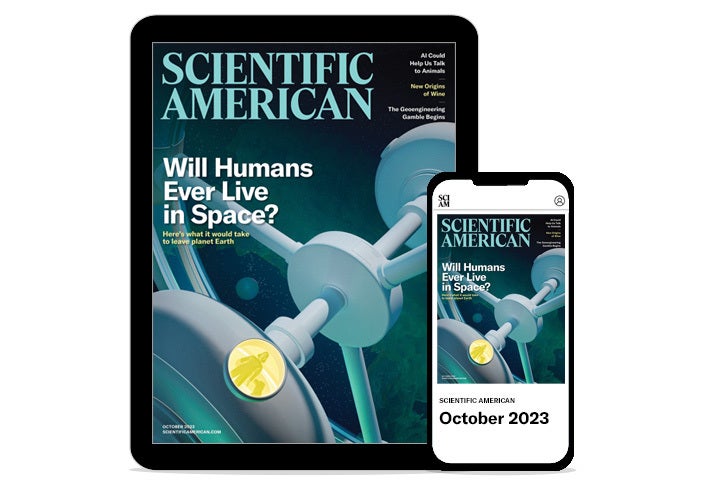 $39.00/year
- Digital access to monthly issues
- Digital archive access from 1845 to today with more than 7,000 issues!
- Scientific American iOS and Android app
- Print & Digital
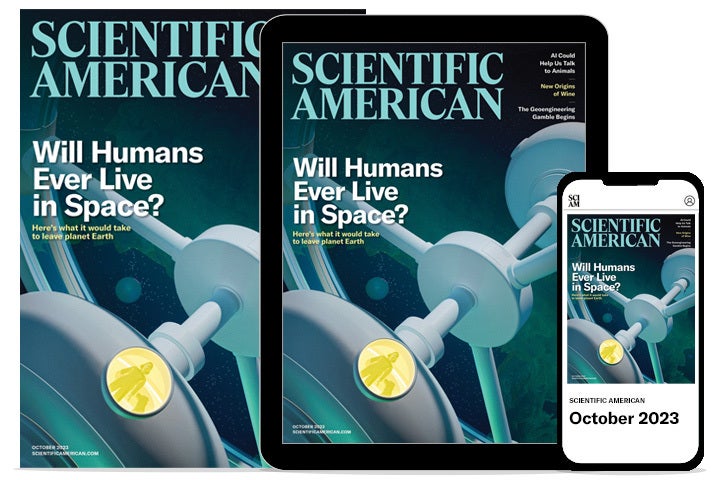 $79.00/year
- Digital
- Plus
- Monthly issues of Scientific American delivered to your home (11 issues per year includes a double issue in July-August)
- Unlimited
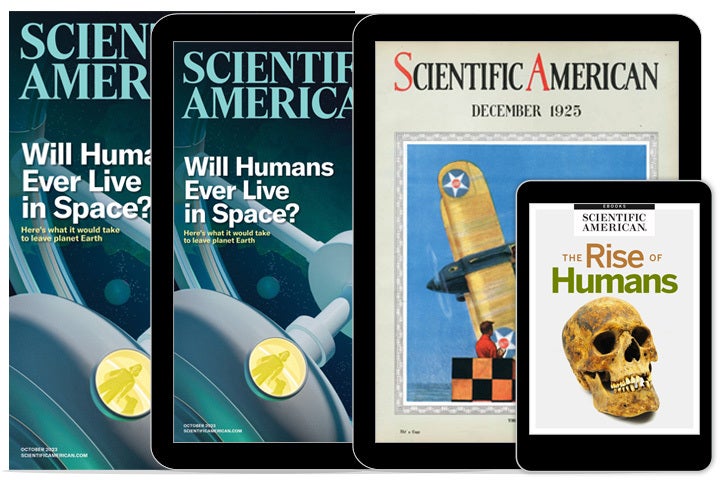 $199.00/year
- Print & Digital
- Plus
- Subscriber-only newsletter from Editor in Chief, Laura Helmuth
- Access to all Special Editions
- Free digital gift subscription
- Scientific American tote bag
- First issue reprint from 1845
You can cancel your subscription at any time.
Sales tax may apply.
Why Scientific American?
 Science Journalism You Can Trust
Since 1845 Scientific American has been bringing its readers unique insights about developments in science and technology.
 Insight, Mystery, Discovery
Stay up to date with award-winning reports on the latest research, ideas and knowledge in science.
 Risk Free, Cancel Anytime
Subscribe today for full access to all of our stories. Cancel at any time for any reason.
Automatic Renewal Program: You can cancel your subscription at any time.
After your initial term, your subscription will automatically renew until you cancel. We will email you a reminder prior to renewal with the renewal rate and date of expected charge. If you do nothing, we will charge the card entered here and your subscription will continue. You can cancel at any time for a refund of the remaining portion of your subscription, just visit your subscription management page or email us at help@sciam.com.
Subscriptions offered here are for individuals only. Institutions, please contact us for pricing.